Raja Ampat - Underwater Photo Cruise
|
The Reefs of Raja Ampat More species of fish & coral inhabit the reefs of the Raja Ampat archipelago than any other place on Earth. Beneath the waters of these remote islands - which form an arc to the north, west, and south of the Bird's Head Peninsula of West Papua in far eastern Indonesia - scuba divers can experience an undersea wilderness where great shoals of fish still roam over vast expanses of living coral. (extract from Diving Indonesia's Raja Ampat by Burt Jones & Maurine Shimlock 2009. Available online direct from the authors, (click on the images below). 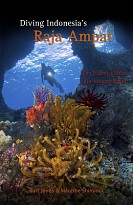
Diving Indonesia's Raja Ampat by Burt Jones & Maurine Shimlock
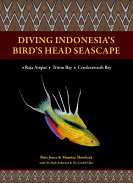
Diving Indonesia's Birds Head Seascape by Burt Jones & Maurine Shimlock
Raja Ampat and the Birds Head Seascape are known to have:

Arborek Bommie has beautiful soft coral and fish life in shallow water.

Gillian Robertson snorkels above the spectacular reefs of Fam Passage.
|
 Schooling sweetlips on the reefs around Mansuar Island.
In 2013 we added a new destination for our underwater photography cruises in eastern Indonesia. We chartered a 32 meter Phinisi Live Aboard to dive the World's Richest Reefs in Raja Ampat. What we found was certainly some of the best diving we have ever experienced.
So from 2014, we are offering Raja Ampat along with our other Indonesian destinations. These are to be extended length trip of 11 nights/12 days, we feel this is necessary, as Raja Ampat is a remote area and not easy to get too. For the travelling that is required to get here, it's worth staying longer to make the journey worthwhile. We begin our journey in Bali, where we will fly to Makassar the capital of South Sulawesi, where we stay overnight close to the airport in Makassar then early the next morning fly from Makassar to Sorong, the gateway to the islands of the Four kings (Raja Ampat in Indonesian). Once we are in Sorong, the gateway to the Raja Ampat Islands, we will board the live aboard in Sorong Harbor and begin cruising north west for a few hours until we arrive at the dive sites of Batanta Island. The next 11 days we will continue our cruise stopping at the areas peak underwater photography sites in the northern and central Raja Ampat islands along the way. We will not be visiting the southern islands on this trip, as the distances required to travel from the northern islands to the south will necessitate multiple overnight journeys.
We do no overnight passages, as we have seen first-hand that no-one sleeps well on a boat motoring overnight. Our plan is to be anchored or moored each night at a night dive location, and any travelling will be between dives during the daytime. Should we need to travel a longer distance to get to a further destination, we will do this in the late afternoon/evening, to still allow a normal days diving whenever we can.
Raja Ampat diving is both rich and diverse. We will:
The adventure of the unexpected is one of the great draw cards of this trip. But the things that we can guarantee are:

The rock islands inside Penemu Lagoon are spectacular when travelled by dinghy.
We have spent a considerable time researching boats and operators in Raja Ampat and have now accepted that very few fit our needs. First and foremost among our requirements is the necessity of relatively small groups. As no underwater photographer wants to be in a group of 16-18 other divers on a dive site. Our policy has been to never have more than 12 divers (including us) on our trips. It seems to us that many of the boats available in Raja Ampat are large boats that require a large number of passengers to make trips affordable.
We also feel that Air Conditioned cabins are a necessity in a humid place like West Papua, along with an outside shaded rest area, plus an inside eating area (in case it rains - which it can do anytime in the tropics). It is surprising how many boats don't offer these basic necessities. The Raja Ampat Live-aboard we have selected for this cruise is 32 metres long and has 6 cabins, so a total of 12 guests onboard. All cabins are individually air conditioned and have their own ensuite bathroom/toilet/shower. Cabins are not huge, but are big enough for sleeping-in and for reading a book in air conditioned comfort. The boat has been operating in Raja Ampat for over 10 years and the guides and crew are local people, all familiar with the dive sites, the islands and its people. It is not a luxury live-aboard, but it is clean, comfortable and has a very dedicated crew. We feel that the crew on this boat, are some of the most professional people we have met in the live-aboard dive industry. From the cook who prepares delicious meals every day, to the dive guides who find so many critters to photograph and know each dive site so well. To the dive deck crew who wash and dry camera's for each guest. The dinghy drivers who are right above you on every safety stop. The captain who positions the boat precisely where it is needed at the exact time required. An engineer who fixes any problems without a fuss. One item that we would like to have, but this boat does not have is Nitrox. It is not available, so please don't expect it on our Raja Ampat trips. Most of the dive sites in Raja Ampat are in shallower depths than we expected, so we feel it is not as big an issue as it is at other destinations, with 80% of our dives in less than 16 meters of water, as this is where all the action is! There is more information at our Raja Ampat - Vessel Details page. We have also a Raja Ampat Video to watch, filmed for Conservation International in Raja Ampat by our good friend professional videographer Chris Paporakis of Spice Island Films. If you have any questions not answered here then please use our Contact Us - Live Aboard page. We have photos from our 2013 trip to Raja Ampat at our Flickr Photo Site, click on any image below to go to our Flickr site: |